Sal's Flamenco - sanding  

Posted in

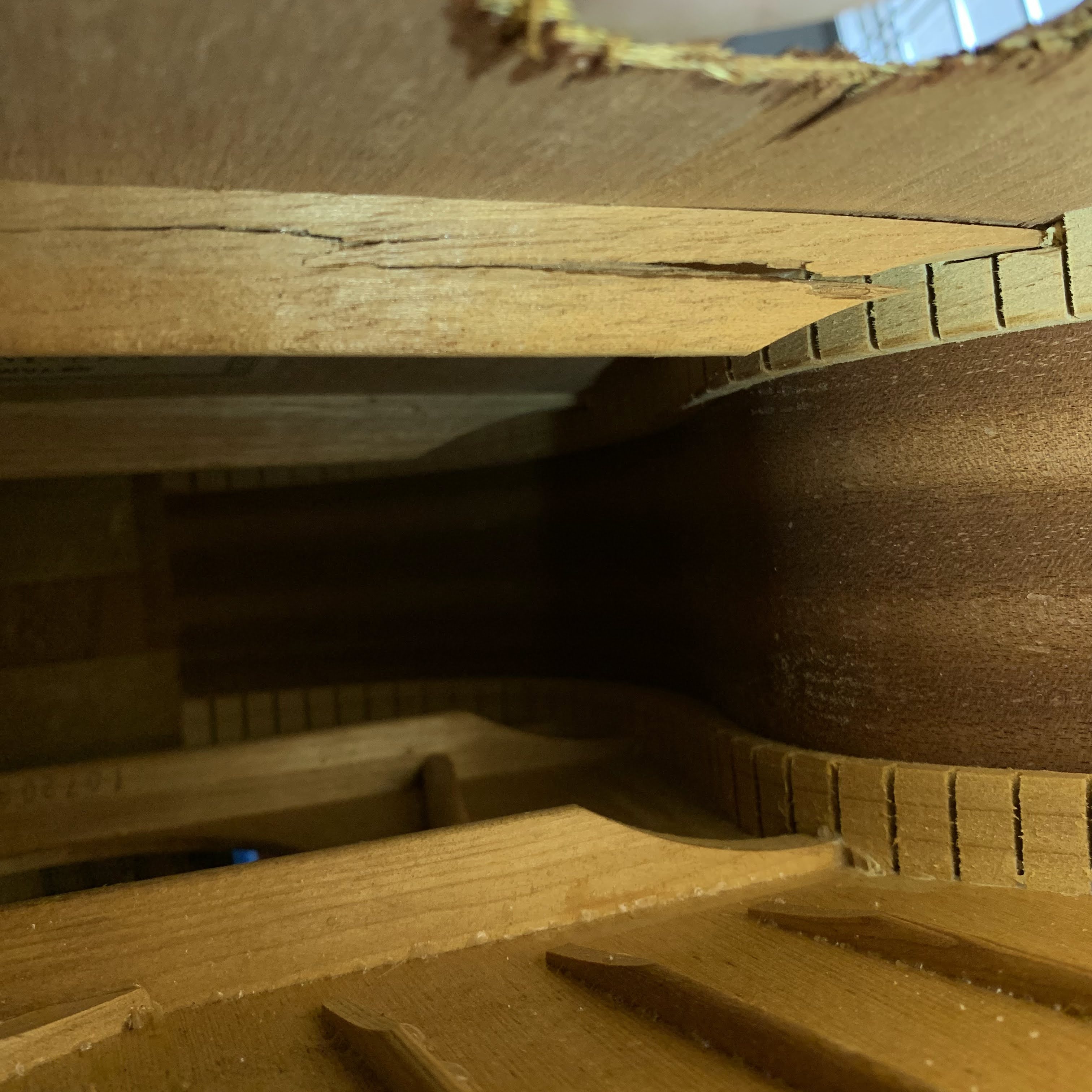
  The tuner slots are rammed.


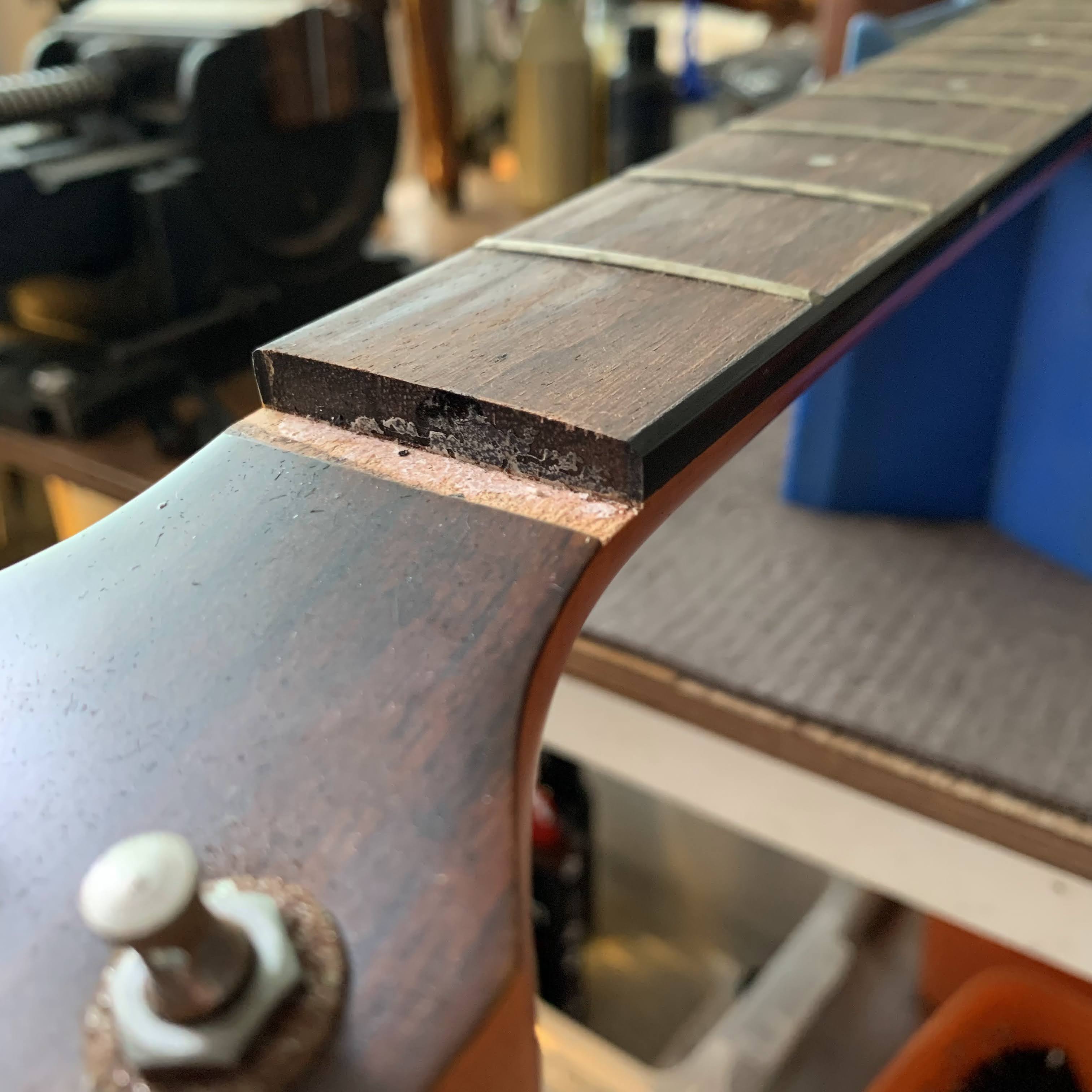
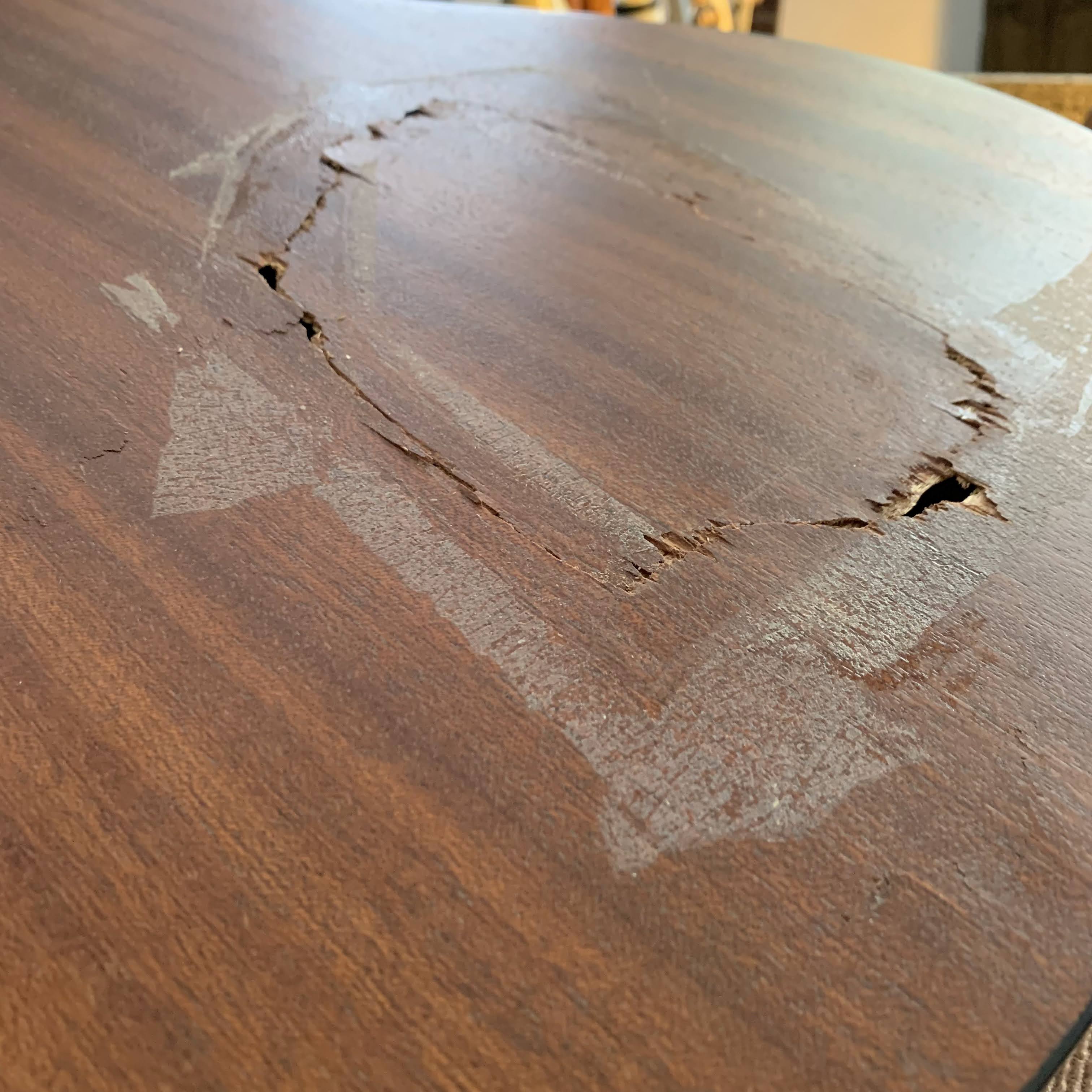
The entire guitar goes through a thorough process of sanding.

The entire guitar is cleaned with naptha from all sanding dust, let dry, awaiting to be finished.

Sal's Flamenco - gluing the bridge  

Posted in

I made a vacuum pump from a compressor a couple of years ago, when I was swamped with repair work, especially bride reglues. It worked great for that period, re-gluing many bridges, including a Paul Fischer, Paulino Bernabe, among very many others. Just 2 weeks ago, it failed! So it's back-up plan, to the bridge clamps I go.
Left her clamped up overnight and chiselled clean the glue squeeze out.

Sal's Flamenco - the bridge II  

Posted in

Once you have used the 12-hole design, you won't look back. This bridge is designed for a forty five degree break angle.
To achieve a half inch tie block, I need to shave a bit off the edge from the back.

After further profiling on the front and the wings, the bridge is sanded smooth and clean with naptha.
Despite the length, the completed bridge stayed sub-20.

Sal's Flamenco - the bridge  

Posted in

For this guitar, I specially chose the lightest rosewood blank from my stock, as the Flamenco bridge will be significantly longer than usual (18mm longer than the '33 Santos Hernandez!), to achieve the greatest efficiency of the whole box, from the bridge point of view.
Firstly, the nut slot is routed.
The front of the tie block is established with another slot.
Two more vertical routs will determine the wings.
The wings are shaped by chisels, instead, to avoid more saw dust, which power tools, do create lots more. I felt my process with the chisels, scraper, and sandpaper is just as fast, if not more satisfying.
The wings on the bass side is more or less done.
Both wings are completed. But, the Sal Flamenco's bridge is only halfway there.

Sal's Flamenco - neck carving  

Posted in

Establishing the depth of my neck at the 1st and 9th frets with a half round rasp.
With a spokeshave the neck is levelled at those two points. It's great pleasure working with Spanish Cedars. They are not only very workable, but always fills the whole studio with her sweet aroma.


The contour of the neck, the heel and the headstock areas are refined to join seamlessly to each other with various chisels and rasps.